Nubra Valley
Ladakh's desert oasis beyond Khardung La, famed for camel safaris and blooming orchards.
Desert oasis
Hot springs
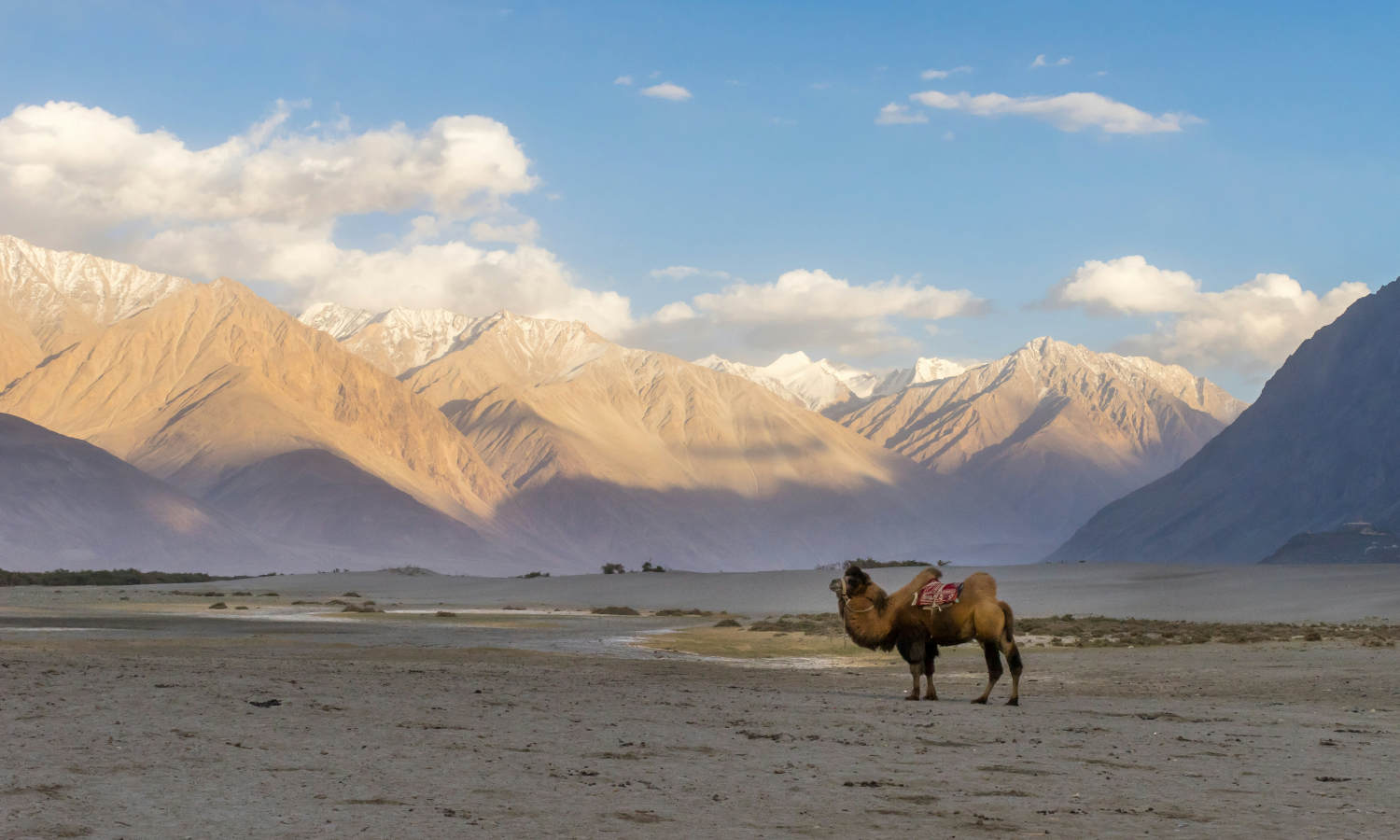
Accessible via the world's highest motorable pass, this northern valley features Hunder's sand dunes, Diskit Gompa, and hot springs amid rare fruits and Bactrian camels.
Desert Oasis of Camels and Cold Dunes
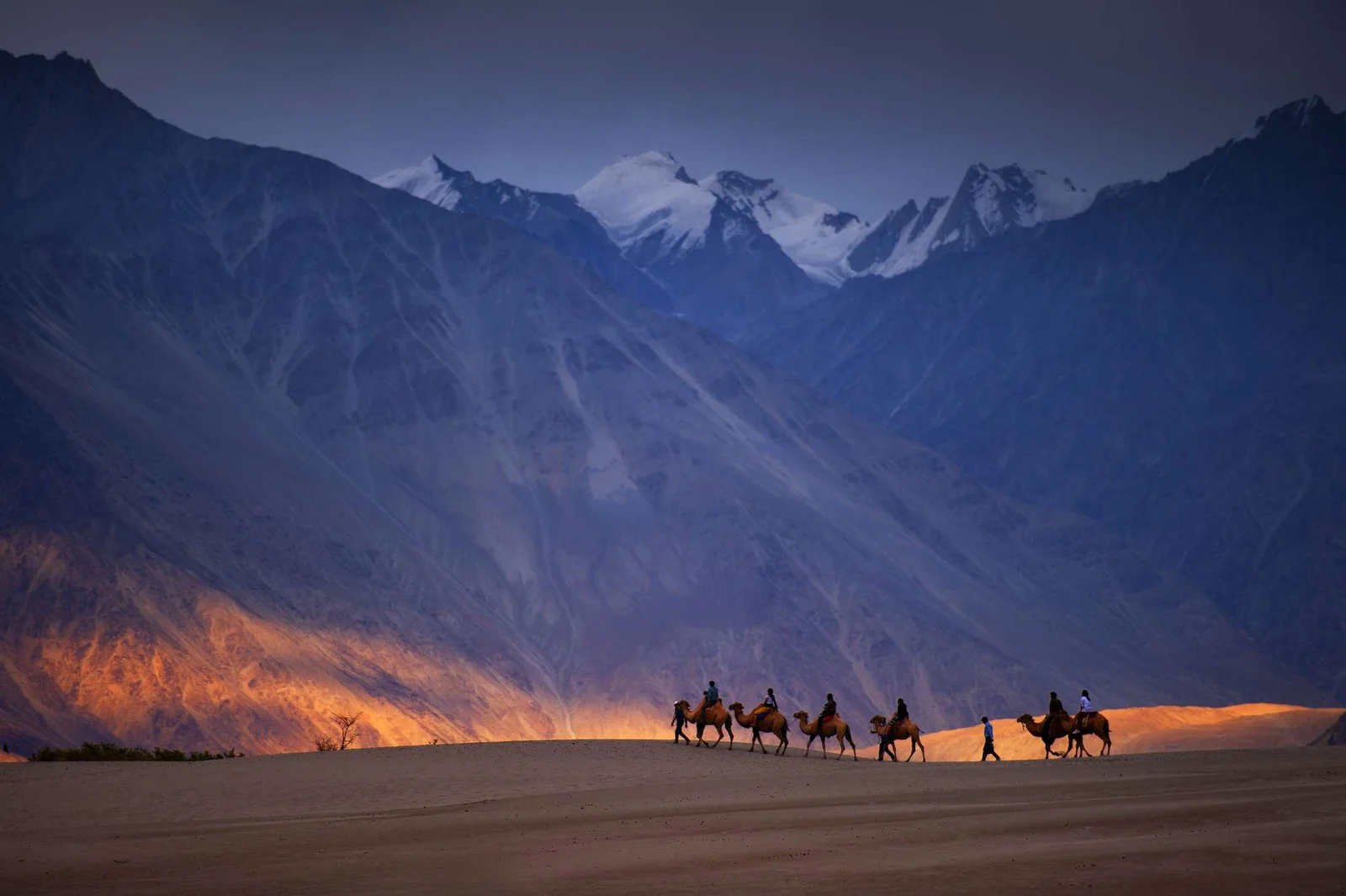
Stretching north from Leh across Khardung La at 5,359 meters, Nubra Valley—meaning "valley of flowers"—contrasts arid dunes with green patches along the Shyok River. Hunder village hosts double-humped camel rides over rippling sands, evoking the Silk Route era. Diskit's towering Buddha statue guards against landslides, while Turtuk offers Balti culture with fresh walnuts and apricots. Panamik's sulfur springs provide therapeutic soaks. Remote yet accessible by permit, Nubra's cold desert microclimate supports barley and seabuckthorn, drawing trekkers and photographers to its surreal beauty.
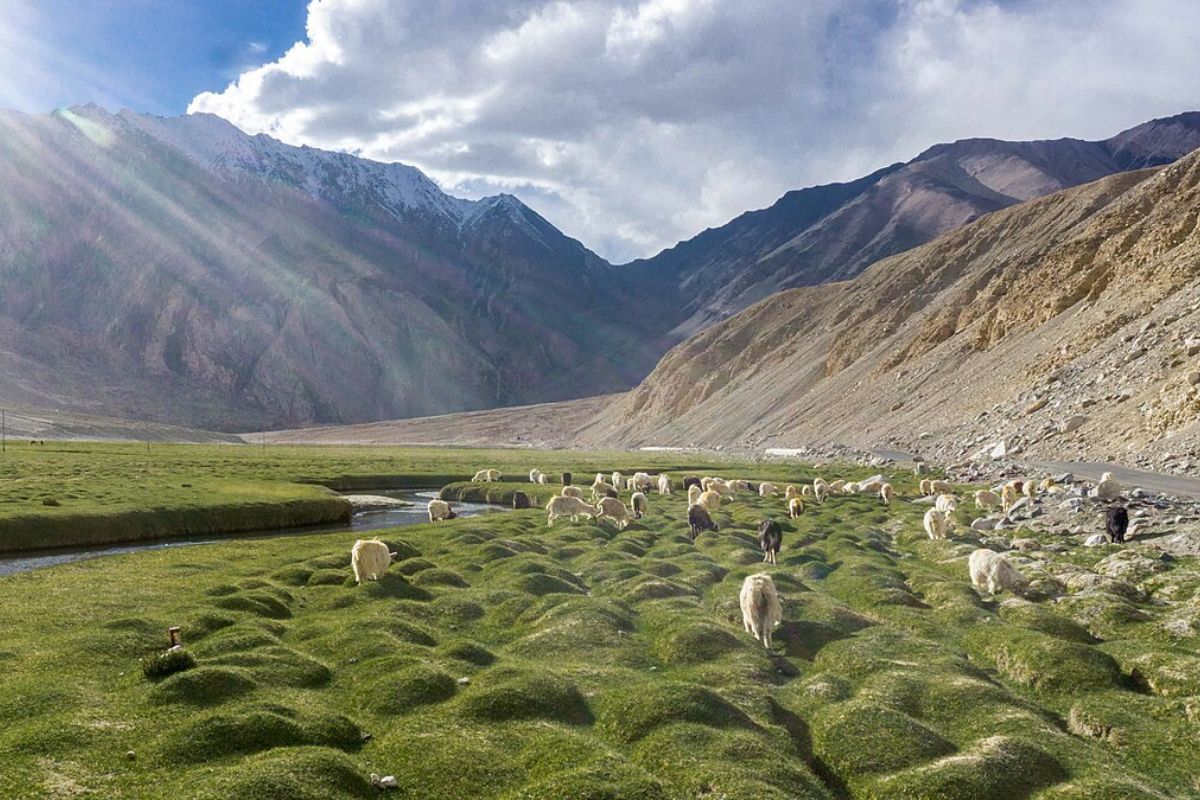
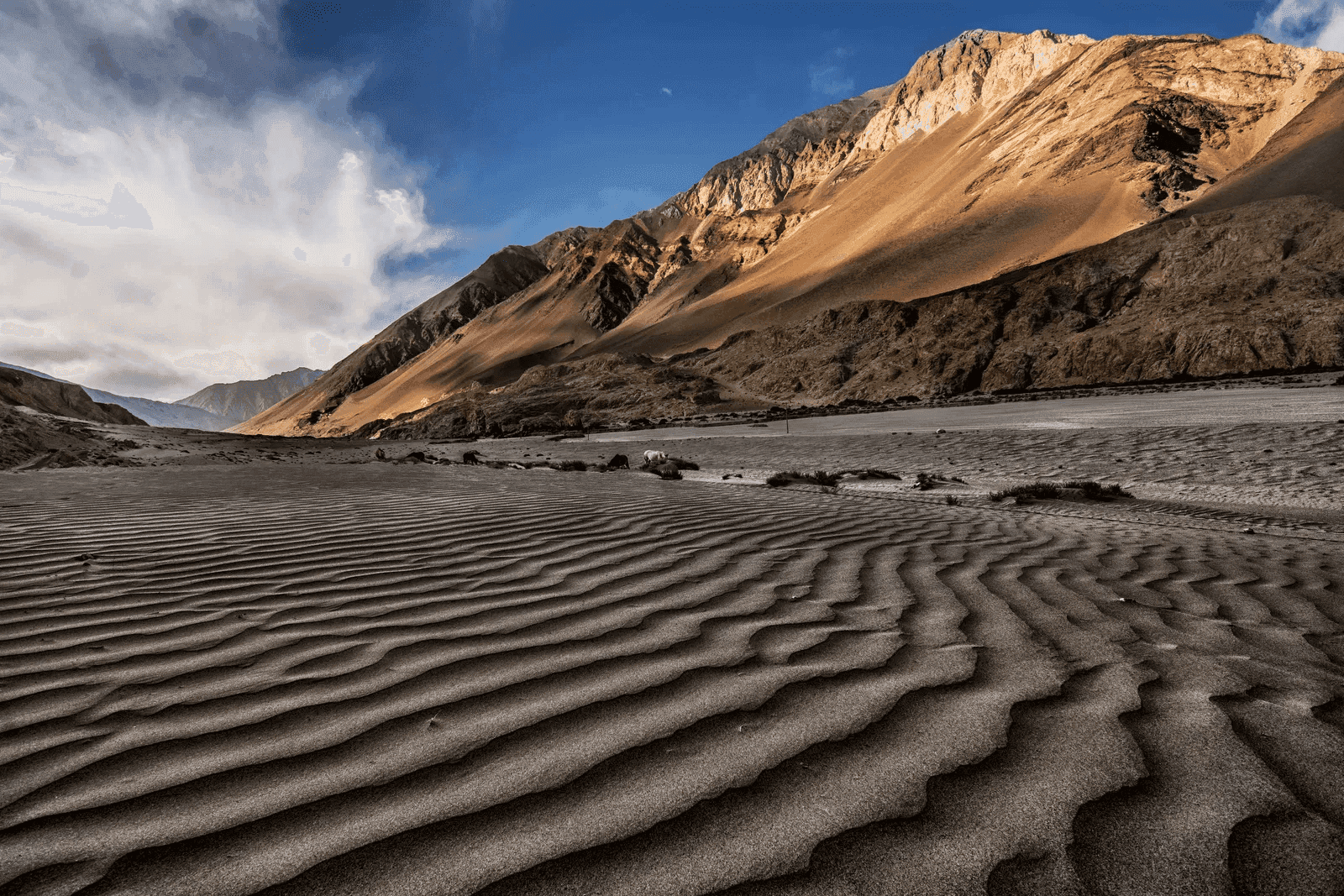
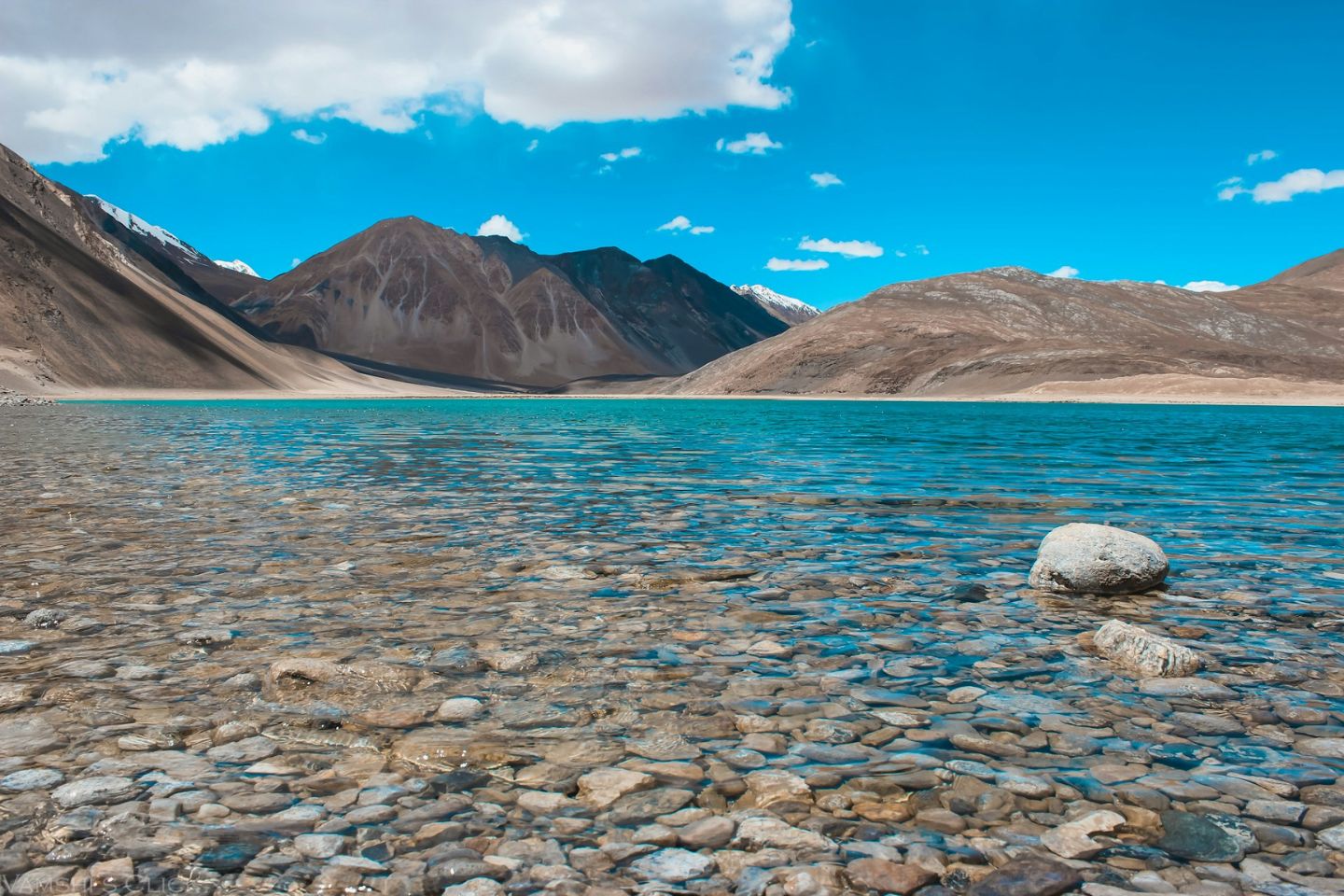
Nubra Valley unfolds beyond Khardung La's prayer flags, Shyok River carving turquoise paths through golden Hunder dunes where Bactrian camels sway in cold desert waves. Rippling sands stretch endless under relentless sun, shadows dancing like Silk Route ghosts across barley fields and seabuckthorn groves.
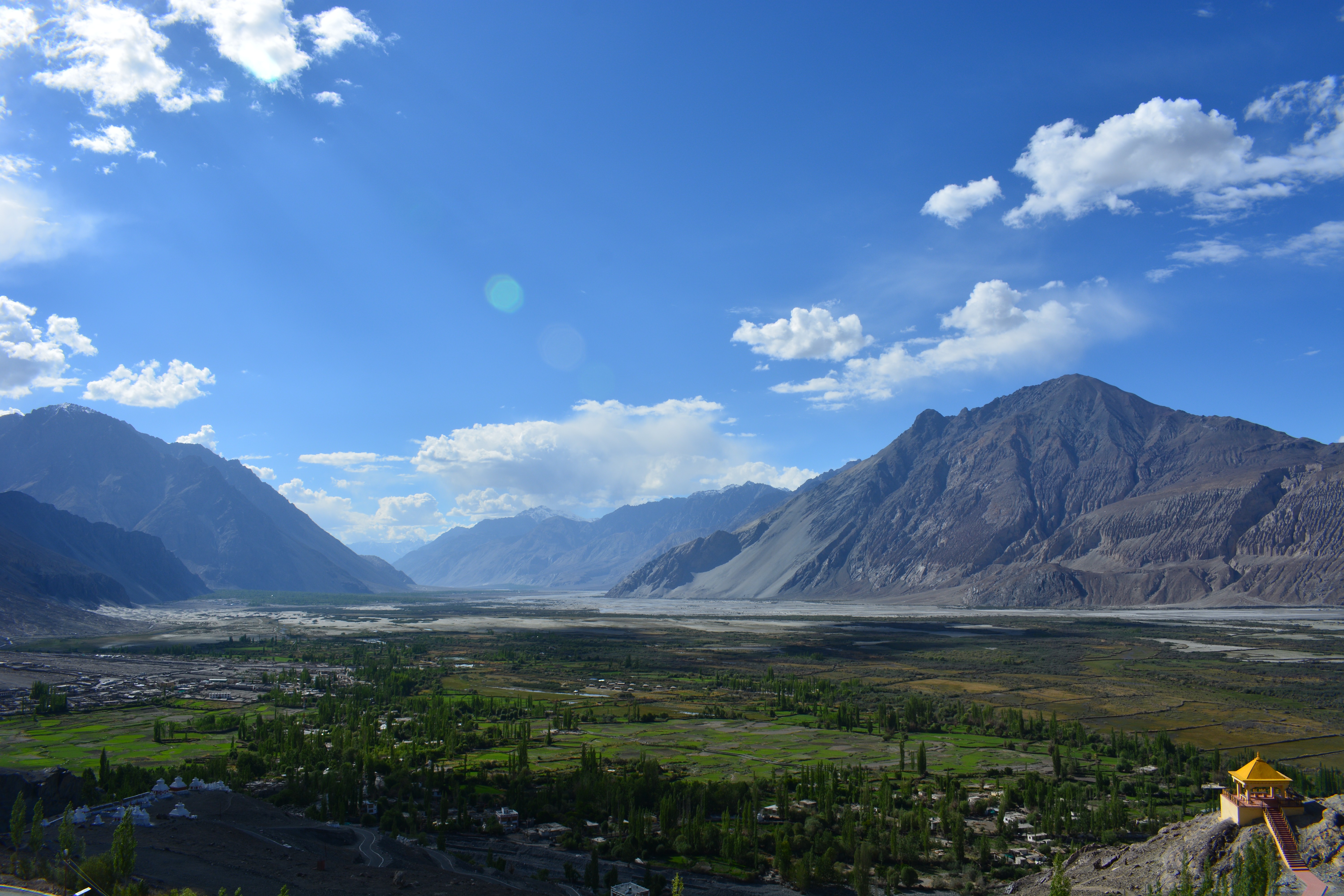
At Diskit Gompa that evening, the 106-meter Buddha statue glowed like a colossal guardian against the fiery sunset, its serene gaze promising protection from the pass's treacherous landslides. Priya climbed the gompa's steps amid chanting pilgrims, the air thick with juniper incense, before venturing deeper to Turtuk village. There, amid Balti homes clinging to terraced fields, she savored fluffy apricot pancakes washed down with fresh walnut milk, villagers gathering to share haunting songs of lands divided by partition lines long faded into memory.
Nubra mirrored her dreams: pushing through adversity's dunes, defiant like fleeting apricot blossoms in cold winds.
More Destinations
Nubra Valley
Ladakh's desert oasis beyond Khardung La, famed for camel safaris and blooming orchards.
Desert oasis
Hot springs
Accessible via the world's highest motorable pass, this northern valley features Hunder's sand dunes, Diskit Gompa, and hot springs amid rare fruits and Bactrian camels.
Desert Oasis of Camels and Cold Dunes
Stretching north from Leh across Khardung La at 5,359 meters, Nubra Valley—meaning "valley of flowers"—contrasts arid dunes with green patches along the Shyok River. Hunder village hosts double-humped camel rides over rippling sands, evoking the Silk Route era. Diskit's towering Buddha statue guards against landslides, while Turtuk offers Balti culture with fresh walnuts and apricots. Panamik's sulfur springs provide therapeutic soaks. Remote yet accessible by permit, Nubra's cold desert microclimate supports barley and seabuckthorn, drawing trekkers and photographers to its surreal beauty.
Nubra Valley unfolds beyond Khardung La's prayer flags, Shyok River carving turquoise paths through golden Hunder dunes where Bactrian camels sway in cold desert waves. Rippling sands stretch endless under relentless sun, shadows dancing like Silk Route ghosts across barley fields and seabuckthorn groves.
At Diskit Gompa that evening, the 106-meter Buddha statue glowed like a colossal guardian against the fiery sunset, its serene gaze promising protection from the pass's treacherous landslides. Priya climbed the gompa's steps amid chanting pilgrims, the air thick with juniper incense, before venturing deeper to Turtuk village. There, amid Balti homes clinging to terraced fields, she savored fluffy apricot pancakes washed down with fresh walnut milk, villagers gathering to share haunting songs of lands divided by partition lines long faded into memory.
Nubra mirrored her dreams: pushing through adversity's dunes, defiant like fleeting apricot blossoms in cold winds.
More Destinations
Nubra Valley
Ladakh's desert oasis beyond Khardung La, famed for camel safaris and blooming orchards.
Desert oasis
Hot springs
Accessible via the world's highest motorable pass, this northern valley features Hunder's sand dunes, Diskit Gompa, and hot springs amid rare fruits and Bactrian camels.
Desert Oasis of Camels and Cold Dunes
Stretching north from Leh across Khardung La at 5,359 meters, Nubra Valley—meaning "valley of flowers"—contrasts arid dunes with green patches along the Shyok River. Hunder village hosts double-humped camel rides over rippling sands, evoking the Silk Route era. Diskit's towering Buddha statue guards against landslides, while Turtuk offers Balti culture with fresh walnuts and apricots. Panamik's sulfur springs provide therapeutic soaks. Remote yet accessible by permit, Nubra's cold desert microclimate supports barley and seabuckthorn, drawing trekkers and photographers to its surreal beauty.
Nubra Valley unfolds beyond Khardung La's prayer flags, Shyok River carving turquoise paths through golden Hunder dunes where Bactrian camels sway in cold desert waves. Rippling sands stretch endless under relentless sun, shadows dancing like Silk Route ghosts across barley fields and seabuckthorn groves.
At Diskit Gompa that evening, the 106-meter Buddha statue glowed like a colossal guardian against the fiery sunset, its serene gaze promising protection from the pass's treacherous landslides. Priya climbed the gompa's steps amid chanting pilgrims, the air thick with juniper incense, before venturing deeper to Turtuk village. There, amid Balti homes clinging to terraced fields, she savored fluffy apricot pancakes washed down with fresh walnut milk, villagers gathering to share haunting songs of lands divided by partition lines long faded into memory.
Nubra mirrored her dreams: pushing through adversity's dunes, defiant like fleeting apricot blossoms in cold winds.